Eagle Eye Tracker Limited - info@eagleeyett.com
#333-5678
Crism Ltd Auto Sales and Service Centre- www.crism.com
#632-7110
R.Ramai Servicing Centre- https://www.facebook.com/rramaiservicingcentre/
#490-3899
Any other additions and recommendations are welcomed...
Friday, 27 April 2018

Prices, Prices, prices
Toyota Prius (Local)- $260,000 TTD
Toyota Aqua (Foreign used)- $60,000 TTD
Hyundai Ioniq (Local)- $180,000 TTD
Kia Niro (Local)- Dynamic – $208,301.96
Exclusive – $233,012.96
Toyota Aqua (Foreign used)- $60,000 TTD
Hyundai Ioniq (Local)- $180,000 TTD
Kia Niro (Local)- Dynamic – $208,301.96
Exclusive – $233,012.96
Mazda 3 (Foreign Used) (Hybrid)- $130,000.00 TTD
Honda Accord EX Hybrid (Foreign Used) 2017- $260,000 TTD
Honda Vezel (Foreign Used)- $166,000TTD
Honda Fit (Hybrid)- $120,000TTD
Honda Fit (Hybrid)- $120,000TTD
Nissan X-trail Hybrid (Foreign Used)- $190,000. TTD
Nissan Leaf (Foreign Used)- $80,000 TTD
Tesla in T&T!!!
The first Tesla model in Trinidad and Tobago was brought in by Smart Energy Ltd. Smart Energy Ltd. is a renewable energy and energy efficiency company based in Trinidad and Tobago.

The Model S has a battery with twice the energy density of that on the Nissan Leaf, but the difference in range is more than double. This is also due to other factors such as drag coefficient, weight, motor efficiency and rolling resistance. Musk stated that driving at 65 mph (105 km/h), under normal conditions, gives a reasonable range of 250 miles (400 km).
The energy-saving sleep state powers off the display and other vehicle electronics, after the car goes to sleep. This increases the time it takes the touchscreen and instrument panel to become usable. This mode can decrease the loss of the car's range when not being used (2.3 mi, 3.7 km per day, as of 2013).
Saving a life...
The owners of hybrid vehicles can take certain steps to extend the lifespan of their batteries. Here are a couple tips that can help.
Slow Down…
One of the best ways to extend the lifespan of hybrid vehicles’ batteries is to coast to a stop instead of coming to hard stop. Coasting generates kinetic energy that charges and consequentially extends the battery’s life, so coast to stops as much as is possible. You can also coast when going down big hills, too.
One of the best ways to extend the lifespan of hybrid vehicles’ batteries is to coast to a stop instead of coming to hard stop. Coasting generates kinetic energy that charges and consequentially extends the battery’s life, so coast to stops as much as is possible. You can also coast when going down big hills, too.
… Slow Up.
Instead of putting the pedal to the metal after coming to a complete stop, it’s much better to slowly accelerate. You see, hybrid vehicles shut down their gas engines when they stop at an intersection. Lightly pressing on the accelerator will keep it in all-electric mode. This both helps to cycle the batteries, and also increases hybrid vehicles’ fuel economy. Though this takes a little bit of getting used to, it’s a must-do for any driver who wants to save at the gas pump and save their battery’s life.
Instead of putting the pedal to the metal after coming to a complete stop, it’s much better to slowly accelerate. You see, hybrid vehicles shut down their gas engines when they stop at an intersection. Lightly pressing on the accelerator will keep it in all-electric mode. This both helps to cycle the batteries, and also increases hybrid vehicles’ fuel economy. Though this takes a little bit of getting used to, it’s a must-do for any driver who wants to save at the gas pump and save their battery’s life.
Hybrid vehicles are amazing pieces of technology. Though they do cost a little bit more upfront, owners wind up saving big over the course of their vehicles’ lives. The only trouble is that these cars’ batteries wear out long before the actual vehicle does. Thankfully, learning to come to a slow stop, and to slowly accelerate will help extend these the lifespan of these vehicles’ batteries.
Hybrid maintenance issues
Similar to regular gas engine cars, hybrid cars require the changing of air filters and oil. However, oil changes are much less frequent in hybrid cars than regular gas engine cars. Often, the hybrid car only needs to get an oil change every 5,000 to 10,000 miles. Air filters for hybrid cars should be replaced about every 40,000 miles.
In comparison to gas engine cars, a hybrid car tends to see more maintenance issues with the hybrid battery. The hybrid battery life is not always reliable and can die off sooner than expected. Between repair and replacement, hybrid batteries tend to have very high replacement costs.
In comparison to gas engine cars, a hybrid car tends to see more maintenance issues with the hybrid battery. The hybrid battery life is not always reliable and can die off sooner than expected. Between repair and replacement, hybrid batteries tend to have very high replacement costs.
Would this long run issue deter your purchase of a hybrid vehicle?... see my next post on how to extend life of Hybrid batteries...
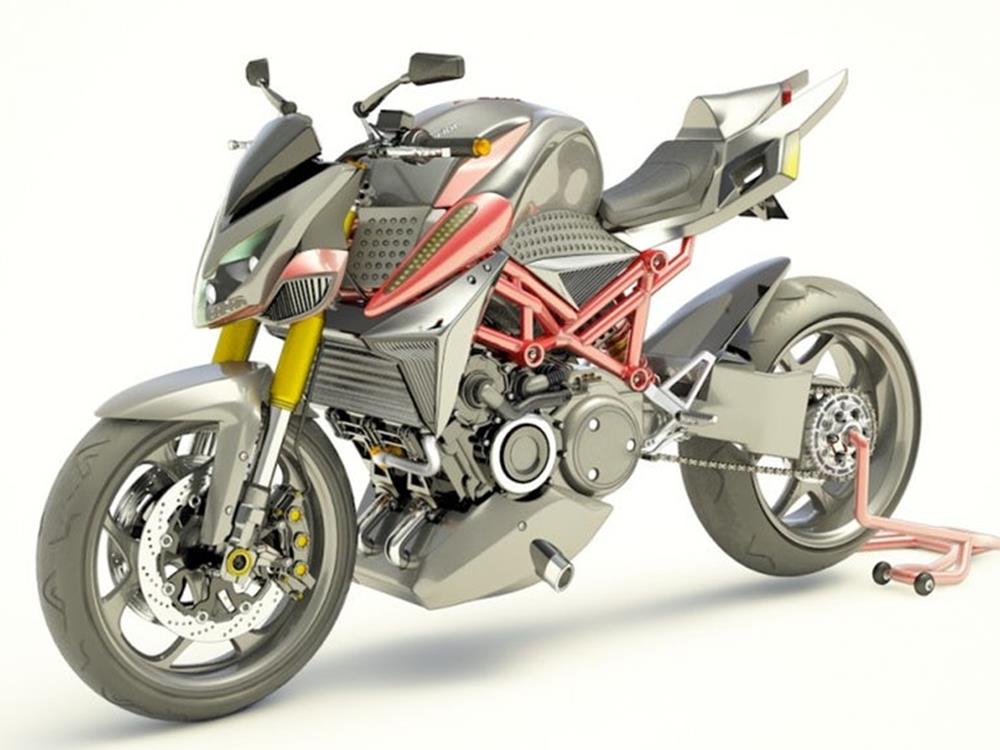

Hybrid vs CNG(Compressed natural Gas). What's your choice?
Hybrids
Hybrids have never achieved the popularity some environmental groups and auto industry analysts expected. A variety of factors hold back sales. For instance, to reduce weight and improve fuel efficiency, automakers have removed sound deadening materials, allowing road and wind noise into the cabin, especially at highway speeds.
Hybrids cost more than regular cars. With the average price of regular gasoline now well under $3 a gallon nationally, the payback period on gas savings can be long.
Still, hybrids are a great choice for those who drive many miles — especially in stop-and-go traffic, when the cars recapture energy during braking to power electric motors that help propel the car and save gas.
Some are exceptionally well done. The Honda Accord hybrid is a full-size, family sedan that gets 47 mpg in combined driving and goes more than 550 miles between gas station stops
Compressed Natural Gas
Natural gas cars are only a little more polluting than a comparable hybrid, and they are less expensive to fuel. But the CNG tanks take up too much space, limiting the size of the cabin and trunk, and their driving range is limited. The CNG Civic travels less than half the distance on one fueling than the gasoline model and only a third of the hybrid.
"CNG is probably a dead technology for consumers, but still useful for fleet operations," Baumhefner said.
Plug in Hybrids, is Trinidad and Tobago ready?!
A plug-in hybrid electric vehicle (PHEV) is a hybrid electric vehicle whose battery can be recharged by plugging it in to an external source of electric power as well by its on-board engine and generator. For the most part Plug in Hybrids can be charged at specialised 120-240 volt, home outlets, but, if power runs out away from home, what happens? Other countries have charging stations outfitted at many gas stations. Do you think Trinidad and Tobago would ever be infrastructurally ready to effectively handle Plug in Hybrid vehicles?
Wednesday, 18 April 2018
The Big Crash

The amount of oil displaced by electric cars would depend on and when vehicle sales take off.
For Electric Vehicles to achieve widespread adoption, one of four things must happen:
1. Governments must offer incentives to lower the costs.
2. Manufacturers must accept extremely low profit margins.
3. Customers must be willing to pay more to drive electric.
4. The cost of batteries must come down.
In Trinidad and Tobago's current economy and mindset it is highly unlikely any of these options can be achieved unless or otherwise citizens take a stand against the exploitation of the vehicular market prices and standard of cars received.
It’s looking like the 2020s will be the decade of the electric car.

With all good technologies, there comes a time when buying the alternative no longer makes sense. Think smartphones in the past decade, color TVs in the 1970s, or even gasoline cars in the early 20th century. Predicting the timing of these shifts is difficult, but when it happens, the whole world changes.
Battery prices fell 35 percent last year and are on a trajectory to make unsubsidized electric vehicles as affordable as their gasoline counterparts in the next six years, according to a new analysis of the electric-vehicle market by Bloomberg New Energy Finance (BNEF).
That will be the start of a real mass-market liftoff for electric cars. By 2040, long-range electric cars will cost less than $22,000 (US), according to the projections. Thirty-five percent of new cars worldwide will have a plug, can you see this happening in Trinidad and Tobago?
If this trend does pick up do you think that you will be brave enough to be apart of this movement?
Tuesday, 17 April 2018
No lack of power in Porsche's eyes!

Oliver Blume, CEO Porsche AG, Porsche Panamera 4 E-Hybrid, Motor Show
340 kW/462 PS
Power combined (kW)/Power combined (hp)
4.6 s
Acceleration from 0 - 100 km/h
All wheel drive
Drive
2,5
l/100 km
56
g/km
15,9
kwh/100 km
Monday, 16 April 2018
Met a Hyundai Ioniq driver today in the gas station who said he fills his tank once a week, just a top up he says of $60.00 TT... His job takes him from Arima to Mayaro 7 days a week!!! Imagine if Hybrid vehicles such as this one were to substantially increase in this country?! What a detrimental blow it would be to our fuel industry.
Tuesday, 10 April 2018
Hybrid Pick-ups and Suvs
Previous notions suggested that pick up trucks and vans were meant to run on diesel fuel to truly attain the full capability of maximum power and potential accompanied with the sheer size of e.g. a Toyota Hilux, Nissan Navara and the Chevy Colorado.
Recent technology from Toyota and Ford put these notions to rest with their new Hybrid lines, they achieve and maintain superb power, torque and economical capabilities but also state that Gasoline engines would reign supreme for a years to come.
In order to break this trend quicker, customers would have to trust and buy into these Hybrid lines of Vans and pickups. The question for the avid pickup and van driver would be, "Are you willing to take a grand step toward the future and give up your gasoline vehicle for a Hybrid version?"
http://news.pickuptrucks.com/2017/12/there-is-a-way-hybrid-or-electric-pickups-can-work.html
Recent technology from Toyota and Ford put these notions to rest with their new Hybrid lines, they achieve and maintain superb power, torque and economical capabilities but also state that Gasoline engines would reign supreme for a years to come.
In order to break this trend quicker, customers would have to trust and buy into these Hybrid lines of Vans and pickups. The question for the avid pickup and van driver would be, "Are you willing to take a grand step toward the future and give up your gasoline vehicle for a Hybrid version?"
http://news.pickuptrucks.com/2017/12/there-is-a-way-hybrid-or-electric-pickups-can-work.html
Sunday, 1 April 2018
Thursday, 15 February 2018
The best in the Business!!! WHo would you go for?!
As of January 2017, over 12 million hybrid electric vehicles have been sold worldwide since their inception in 1997. April 2016, Japan ranked as the market leader with more than 5 million hybrids sold, followed by the United States with cumulative sales of over 4 million units since 1999, and Europe with about 1.5 million hybrids delivered since 2000. Japan also has the world's highest hybrid market penetration. In 2016 the hybrid market share accounted for 38% of new standard passenger car sales, and 25.7% of new passenger vehicle sales including kei cars. Norway ranks second with a hybrid market share of 6.9% of new car sales in 2014, followed by the Netherlands with 3.7%, France and Sweden, both with 2.3%
Global sales are led by the Toyota Motor Company with more than 10 million Lexus and Toyota hybrids sold as of January 2017, followed by Honda Motor Co., Ltd. with cumulative global sales of more than 1.35 million hybrids as of June 2014; Ford Motor Corporation with over 424,000 hybrids sold in the United States through June 2015 and the Hyundai Group with cumulative global sales of 200,000 hybrids as of March 2014, including both Hyundai Motor Company and Kia Motors hybrid models. As of January 2017, worldwide hybrid sales are led by the Toyota Prius liftback, with cumulative sales of almost 4 million units.
The Prius nameplate had sold more than 6 million hybrids up to January 2017. Global Lexus hybrid sales achieved the 1 million unit milestone in March 2016. As of January 2017, the conventional Prius is the all-time best-selling hybrid car in both Japan and the U.S., with sales of over 1.8 million in Japan and 1.75 million in the United States.
The Prius nameplate had sold more than 6 million hybrids up to January 2017. Global Lexus hybrid sales achieved the 1 million unit milestone in March 2016. As of January 2017, the conventional Prius is the all-time best-selling hybrid car in both Japan and the U.S., with sales of over 1.8 million in Japan and 1.75 million in the United States.
Monday, 12 February 2018
The end is near!
Because of a combination of factors, such as environmental concerns, high oil prices and the potential for peak oil, development of cleaner alternative fuels and advanced power systems for vehicles has become a high priority for many governments and vehicle manufacturers around the world.
Sunday, 11 February 2018
How do Hybrids actually work?
Modern Hybrids make use of efficiency-improving technologies such as regenerative brakes which convert the vehicle's kinetic energy to electric energy to charge the battery. Some varieties of Hybrids use their internal combustion engine to generate electricity by spinning an electrical generator to either recharge their batteries or to directly power the electric drive motors; this combination is known as a motor–generator. Many HEVs reduce idle emissions by shutting down the ICE at idle and restarting it when needed; this is known as a start-stop system.
A hybrid-electric produces less emissions from its ICE than a comparably sized gasoline car, since an HEV's gasoline engine is usually smaller than a comparably sized, pure gasoline-burning, vehicle and if not used to directly drive the car, can be geared to run at maximum efficiency, further improving fuel economy. (Natural gas and propane fuels produce fewer emissions.)
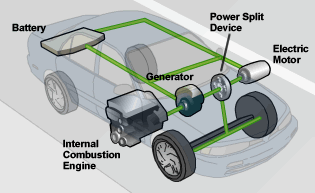
What exactly is a Hybrid vehicle?!
A hybrid electric vehicle (HEV) is a type of hybrid vehicle that combines a conventional internal combustion engine (ICE) system with an electric propulsion system (hybrid vehicle drivetrain). The presence of the electric powertrain is intended to achieve either better fuel economy than a conventional vehicle or better performance. There is a variety of HEV types, and the degree to which each functions as an electric vehicle (EV) also varies. The most common form of HEV is the hybrid electric car, although hybrid electric trucks (pickups and tractors) and buses also exist.
Subscribe to:
Posts (Atom)